Expense Recording

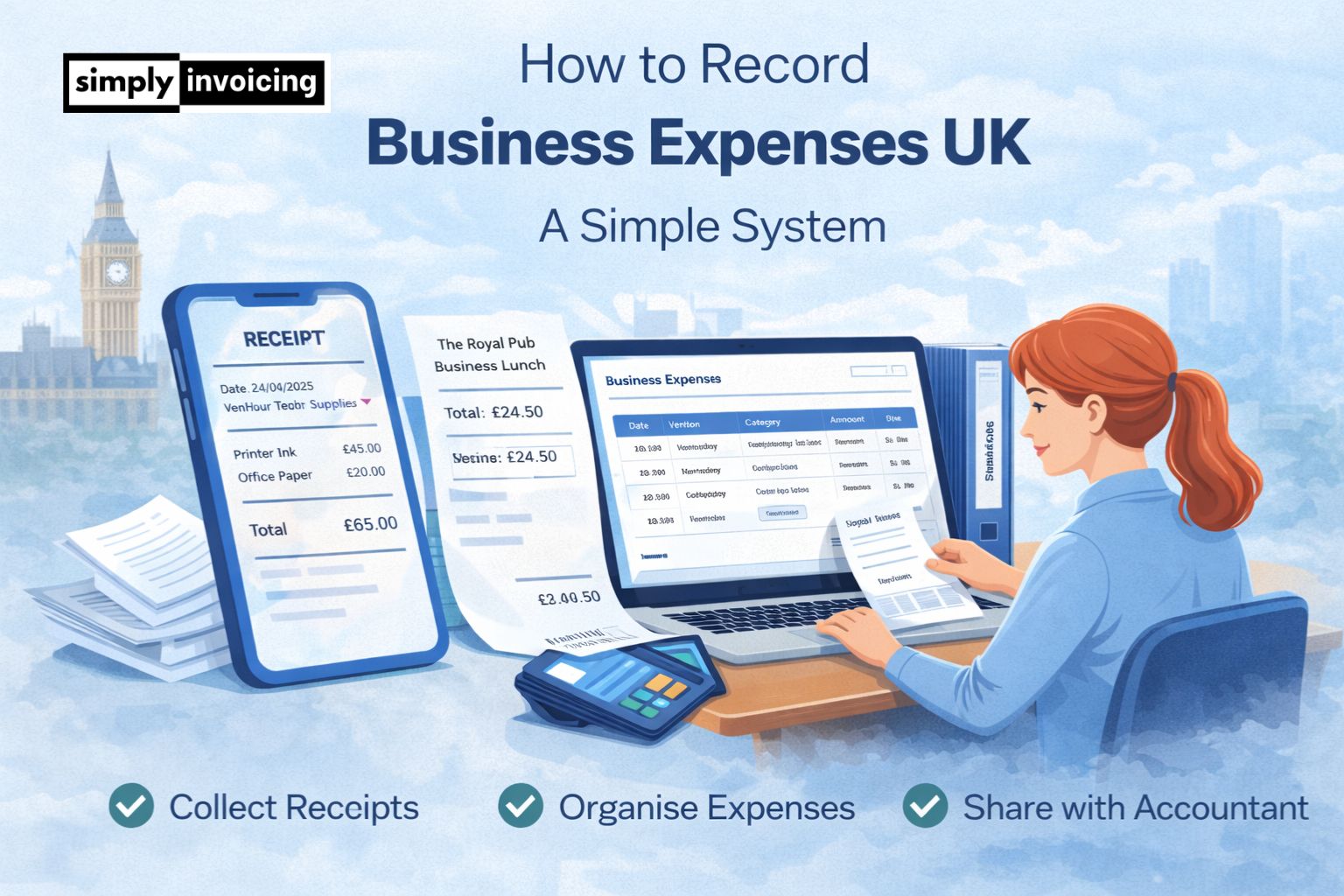
How to Record Business Expenses UK: A Simple System

3 min read
August 2025
56 Views

Recording expenses properly protects your tax position and saves time. This guide gives UK small businesses a simple system: choose an account, set categories, capture proof, log mileage, and reconcile weekly. You will learn what evidence HMRC expects, what is usually allowable, and how to stay organised without overcomplicating your bookkeeping.


Last Updated: 23/03/2026

Why Proper Business Expense Tracking UK Matters

Direct answer:
Proper business expense tracking UK ensures you only pay tax on real profit, stay compliant with HMRC, and maintain accurate financial records for reporting.

Without organised records:

  • You may overpay tax
  • You risk missing allowable deductions
  • Your bookkeeping becomes stressful

Accurate expense recording improves visibility and supports small business bookkeeping UK standards.

What Are Allowable Expenses HMRC?

Allowable expenses are business costs that can be deducted from your taxable profit.

Common sole trader expenses UK include:

  • Office rent
  • Business phone bills
  • Internet costs
  • Travel for business
  • Equipment & tools
  • Software subscriptions
  • Professional services

For limited company expenses UK, rules are similar but must align with company accounting requirements.

Always ensure expenses are:

  • Wholly and exclusively for business use
  • Properly recorded
  • Supported by receipts

Step-by-Step: How to Record Business Expenses UK

Here is a simple, practical system.

Separate Business & Personal Finances

Open a dedicated business bank account. Mixing transactions creates confusion and increases risk during audits.

Record Expenses Weekly (Not Monthly)

Consistency matters more than complexity. Each week:

  • Log all business purchases
  • Categorise expenses
  • Upload receipts

Regular updates reduce year-end stress.

Categorise According to HMRC Expense Rules

Typical categories:

  • Travel
  • Office supplies
  • Utilities
  • Advertising
  • Insurance
  • Professional fees

Correct categorisation simplifies tax reporting.

Store Digital Copies

Under digital record keeping UK standards and Making Tax Digital requirements, businesses must maintain structured digital records. Store:

  • Receipts
  • Invoices
  • Bank transaction records
  • Expense summaries

Paper alone is no longer sufficient for modern compliance.

Reconcile Monthly

Compare:

  • Recorded expenses
  • Bank transactions
  • Card payments

This ensures your data matches reality. Reconciliation prevents errors before tax deadlines.

Digital Record Keeping & MTD

With Making Tax Digital expanding, maintaining MTD digital records is increasingly important.

A compliant system should:

  • Store expenses digitally
  • track income and expenses UK in one place
  • Generate summaries
  • Allow accountant access
  • Provide audit trails

Manual spreadsheets without structure may increase compliance risk.

Common Expense Recording Mistakes

Avoid these frequent errors:

  • Mixing personal and business costs
  • Losing receipts
  • Recording expenses late
  • Claiming non-allowable items
  • Failing to categorise correctly

Even small mistakes can cause tax complications.

Best Way to Track Expenses in 2026

The most reliable approach is using structured expense tracking software UK.

Automatic data storage

Expenses are captured consistently and kept in one place.

Clear categorisation

Correct categories reduce reporting errors and tax confusion.

Easy receipt uploads

Attach receipts immediately for stronger audit readiness.

Real-time visibility

Know your true profit position before deadlines arrive.

Modern systems simplify business expense tracking UK dramatically.

Quick Expense Tracking Checklist

  • Separate business bank account
  • Record expenses weekly
  • Keep digital copies
  • Categorise properly
  • Review monthly
  • Use digital tools

Consistency prevents problems.

Frequently Asked Questions

You should record business expenses by keeping digital records of all transactions, categorising them correctly, storing receipts and reconciling monthly. Using expense tracking software helps ensure HMRC compliance.

Allowable expenses include costs wholly and exclusively for business use, such as travel, office supplies, software, rent and professional services.

Yes. Under Making Tax Digital requirements, businesses must maintain structured digital records to support tax submissions.

HMRC requires records to be kept for at least 6 years. Digital storage is recommended for security and compliance.

Spreadsheets can be used, but structured expense tracking software provides better organisation, compliance support and reporting accuracy.

Still have questions?

Our support team is here to help. Get in touch with us anytime.

Contact Support

Related Articles

UK Compliance & VAT

Making Tax Digital UK 2026 Guide | Simply Invoicing

Making Tax Digital UK 2026 explained for sole traders and landlords. Learn MTD for Income Tax rules, thresholds, quarterly updates and HMRC software requirements.

3 min read Read
Software Tips

Automate Your Invoicing: Save 5+ Hours Every Week

Learn how to automate recurring invoices, payment reminders, and expense tracking to reclaim 5+ hours weekly and reduce errors.

3 min read Read
Payments & Cash Flow

5 Ways to Reduce Late Invoice Payments (That Actually Work)

Discover five proven strategies UK small businesses and self-employed professionals use to reduce late invoice payments, improve cash flow, and get paid faster without damaging client relationships.

3 min read Read