Payments & Cash Flow

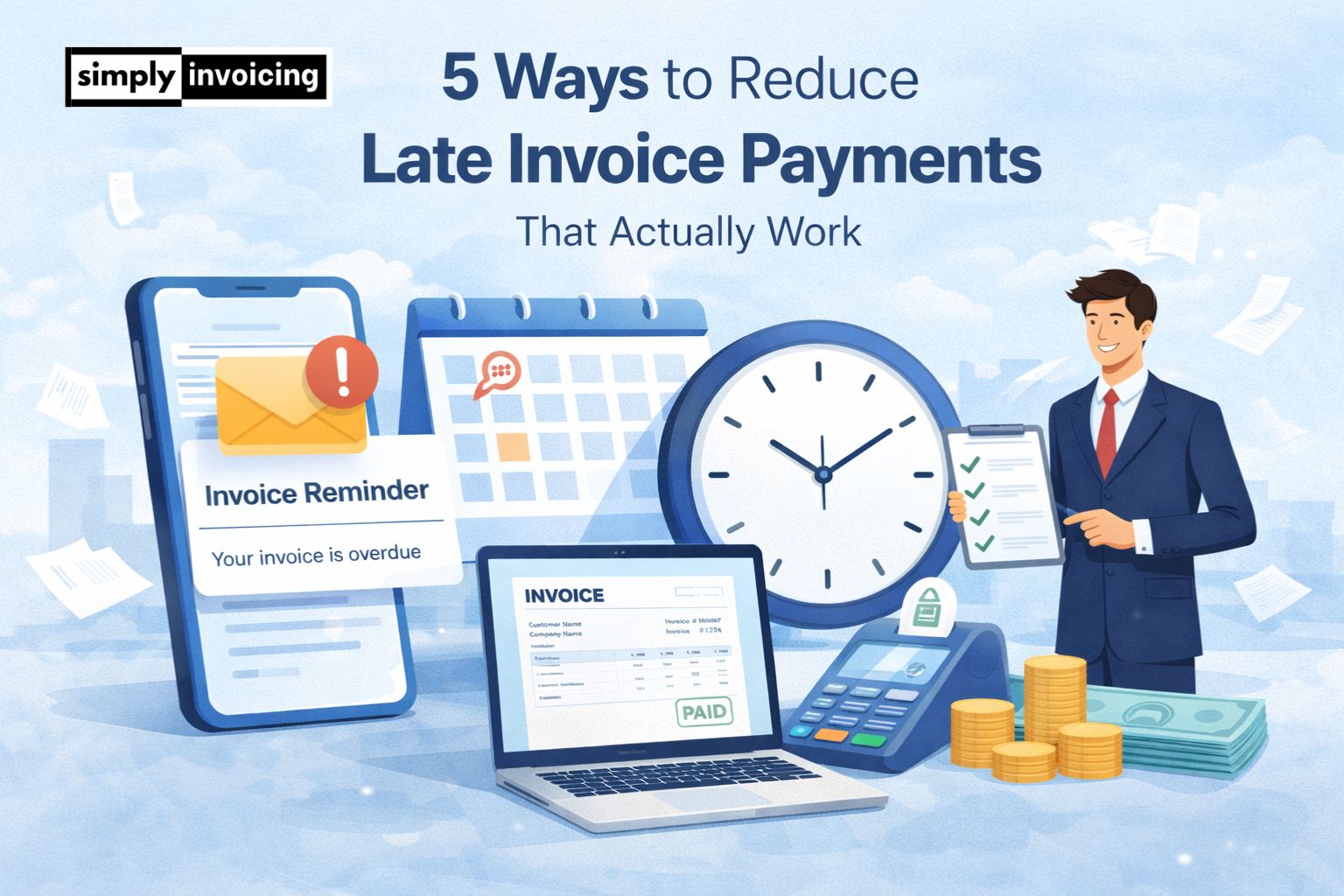
5 Ways to Reduce Late Invoice Payments (That Actually Work)

3 min read
June 2025
50 Views

Late invoice payments disrupt cash flow, strain client relationships, and create unnecessary stress for small businesses and self-employed professionals. This guide outlines five practical, field-tested strategies UK businesses use to get paid faster β€” from tightening payment terms to automating reminders and introducing structured follow-up systems that protect both revenue and professionalism.


Last Updated: 23/03/2026

Why Do Late Invoice Payments Happen?

Direct answer:
Late payments usually happen because of unclear payment terms, manual invoicing delays, lack of reminders or inconsistent follow-up processes.

Common causes include:

  • No clear due date
  • Invoices sent late
  • Clients forgetting payment
  • No automatic reminders
  • Poor credit control system

Fixing the system fixes the problem.

5 Proven Ways to Reduce Late Invoice Payments

Set Clear Payment Terms from Day One

Unclear expectations lead to delays. Every invoice should include:

  • Clear due date
  • Payment method
  • Bank details
  • Late payment terms (if applicable)

Shorter payment terms (e.g., 7 or 14 days instead of 30) can significantly improve small business cash flow UK. Clarity prevents confusion.

Send Invoices Immediately

Delays in invoicing create delays in payment. To get paid faster invoices must be:

  • Sent immediately after work completion
  • Professionally formatted
  • Easy to read

Using online invoicing software UK ensures invoices are sent in seconds β€” not days. The earlier you send it, the earlier you get paid.

Use Automatic Payment Reminders

This is one of the most effective late payment solutions UK. Instead of manually chasing:

  • Send reminders 3 days before due date
  • Send reminders on the due date
  • Send follow-ups after overdue

automatic payment reminders remove emotion from the process and increase payment speed. Most clients don’t ignore invoices β€” they forget them. Automation solves forgetfulness.

The harder it is to pay, the longer it takes. To help avoid late payments:

  • Accept bank transfer
  • Offer card payments
  • Provide online payment links
  • Enable faster payment methods

Convenience accelerates payment.

Track Invoice Status in Real Time

If you don’t monitor payments, problems escalate. Use systems that allow you to:

Visibility improves control. Good credit control isn’t aggressive β€” it’s organised.

How Automation Changes Everything

Manual follow-ups waste time and create awkward conversations.

  • Automatically send invoices
  • Trigger reminders
  • Track payment status
  • Store payment history
  • Maintain customer records

This structured process significantly reduces overdue invoices UK. Automation protects relationships while improving cash flow.

Common Mistakes That Cause Late Payments

Avoid these:

  • Sending invoices late
  • No due date on invoice
  • No reminder system
  • Mixing manual spreadsheets
  • Inconsistent follow-up
  • Waiting too long to chase

Inconsistent systems create inconsistent cash flow.

Quick Payment Improvement Checklist

  • Send invoices immediately
  • Use clear payment terms
  • Enable automatic reminders
  • Offer easy payment methods
  • Monitor overdue reports weekly

Small changes create measurable impact.

Frequently Asked Questions

You can reduce late payments by setting clear payment terms, sending invoices immediately, using automatic payment reminders and tracking invoice status in real time.

Yes. Automatic reminders significantly improve payment speed because they prompt clients before and after due dates without manual chasing.

Shorter payment terms such as 7 or 14 days often improve cash flow. Clear due dates and consistent enforcement are more important than long terms.

UK businesses may charge statutory interest on late payments under certain conditions. However, prevention strategies are usually more effective than penalties.

Yes. Invoicing software helps by sending invoices instantly, triggering reminders and tracking payment status automatically.

Still have questions?

Our support team is here to help. Get in touch with us anytime.

Contact Support

Related Articles

UK Compliance & VAT

Making Tax Digital UK 2026 Guide | Simply Invoicing

Making Tax Digital UK 2026 explained for sole traders and landlords. Learn MTD for Income Tax rules, thresholds, quarterly updates and HMRC software requirements.

3 min read Read
Software Tips

Automate Your Invoicing: Save 5+ Hours Every Week

Learn how to automate recurring invoices, payment reminders, and expense tracking to reclaim 5+ hours weekly and reduce errors.

3 min read Read
Expense Recording

How to Record Business Expenses UK: A Simple System

A simple UK expense tracking system for small businesses to stay organised, keep HMRC-ready records, and claim tax deductions legally.

3 min read Read